

Subaru of Portland - Which AWD system is better for Beaverton, OR commutes: the Crosstrek's Symmetrical All-Wheel Drive or the HR-V's Real Time AWD?
When drivers weigh traction and control in a compact SUV, two systems often come up: the 2026 Subaru Crosstrek's Symmetrical All-Wheel Drive and the 2026 Honda HR-V's Real Time AWD™. Both aim to improve grip, but they take different approaches. Symmetrical All-Wheel Drive in the Crosstrek is always active, sending power to all four wheels for balanced, predictable handling in rain, light snow, and on uneven surfaces. By contrast, Real Time AWD™ on the HR-V is available and engages as slip is detected, routing torque rearward when the front wheels lose traction. For daily commutes around Beaverton, OR, that distinction matters—particularly when road conditions shift in a single trip from dry to damp to leaf-covered. Subaru of Portland helps explain what you’ll feel behind the wheel, so you can choose the system that matches your driving environment.
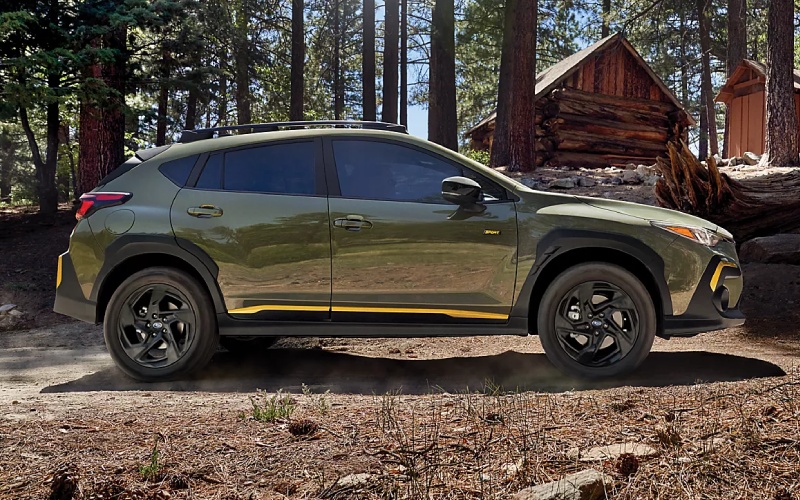
Beyond power delivery, chassis geometry and ground clearance shape your confidence at speed and on challenging roads. The Crosstrek’s standard elevated stance and available 9.3 inches of ground clearance on the Wilderness trim help the tires maintain contact and composure over ruts and steep driveways. The HR-V’s lower ground clearance is well-suited to city streets and parking structures, but it does not provide the same buffer when a curb cut is sharp or a side street is rutted after a storm. If most of your drives shuttle between after-school activities and weekend trailheads, an always-on, balanced AWD system with extra clearance can make your routine feel easier, steadier, and more relaxing.
- How Symmetrical All-Wheel Drive works: Power flows to all four wheels continuously, helping stability and traction before slip begins.
- How Real Time AWD™ engages: Primarily front-drive, it sends torque rearward when sensors detect slippage at the front tires.
- Why balance matters in corners: Even power distribution helps reduce corrective inputs when you encounter mid-corner bumps or wet paint lines.
- Clearance and confidence: Extra ride height can prevent scraping and improve control on steep entries, snow berms, and gravel approaches.
- When systems feel different: On mixed-condition commutes, always-on AWD often feels more natural than reactive torque transfer.
Frequently Asked Questions:
Will Symmetrical All-Wheel Drive help on wet highway merges?
Yes. Because power is already at all four wheels, the vehicle feels planted as you accelerate across slick on-ramps, with fewer traction-control interventions.
Does Real Time AWD™ improve everyday city driving?
It can, especially in rain, by activating rear torque when slip occurs. For drivers who stay on dry pavement, its light, efficient character is appealing.
What if I plan light off-pavement adventures?
The Crosstrek’s available Wilderness trim adds ground clearance and trail-focused hardware that further complements Symmetrical All-Wheel Drive when the pavement ends.
How do driver-assist technologies factor in?
Subaru’s standard EyeSight® Driver Assist Technology and available DriverFocus Distraction Mitigation System add awareness on commutes and road trips, while HR-V’s standard Honda Sensing® suite offers helpful support in traffic.
Ready to compare in person and feel the differences on your routes? Our team is serving Beaverton, OR, Happy Valley, OR, and Vancouver, WA, with side-by-side walkarounds and test drives that mirror your daily routine. Schedule a visit and see how traction, chassis tuning, and ground clearance translate into calm, confident commuting.
Request more 2026 Subaru Crosstrek information
Categories:
Subaru Crosstrek